
March 31, 2026
How To Install A Wig
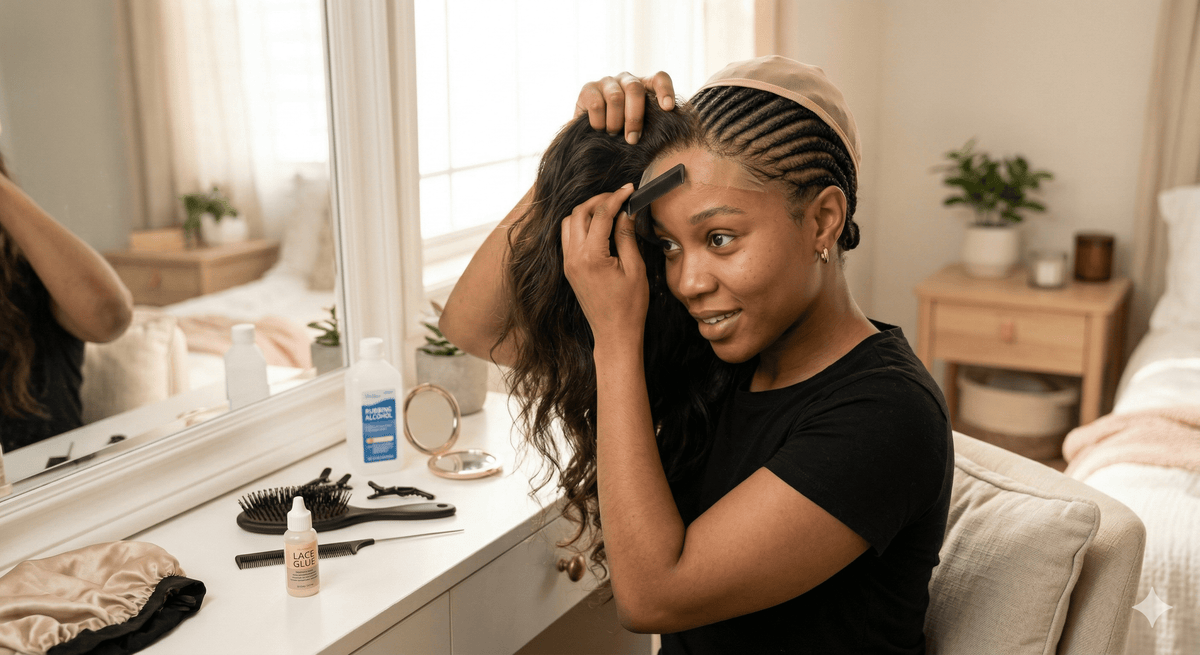
Installing a wig is an art form that blends hair care with precision styling. Whether you are using a lace front, a closure, or a full lace unit, achieving a "melted" hairline is the gold standard. This guide breaks down the professional process into five actionable steps.
1. Preparation: The Foundation of Longevity
A great install starts with what’s underneath. If the base isn’t flat, the wig will look bulky.
- Prep the Natural Hair: Braid your hair into small, flat cornrows or a low bun.
- Scalp Protection: Apply a scalp protector to prevent irritation from adhesives.
- The Stocking Cap Method: Use a cap that matches your skin tone. For a "bald cap" effect, apply a thin layer of lace bond to the hairline, dry it, and trim the excess lace.
2. Customizing the Hairline
Most high-quality wigs require minor "tweaking" to look realistic.
- Bleaching the Knots: This makes the hair appear to be growing directly from the scalp.
-
Plucking: Use tweezers to thin out the hairline, creating a natural density gradient rather than a thick, straight line

3. The "Melt" Process: Applying Adhesives
For a secure, long-term hold, professional stylists prefer the layering technique.
- Cleanse: Use 91% isopropyl alcohol to remove oils from your forehead.
- Apply Adhesive: Apply 2–3 thin layers of lace glue. Wait for each layer to become clear and tacky before applying the next
- Positioning: Place the lace onto the tacky glue, starting from the center of the forehead and moving toward the temples.
4. Securing and Cutting the Lace
- The Tie-Down: Wrap the hairline with an elastic "melt band" for 10–15 minutes. This forces the lace into the adhesive for a seamless finish.
- Trimming: Use a zigzag motion with a razor or small scissors. A straight cut creates a visible line; a jagged edge mimics a natural hairline.
5. Finishing Touches
- Defining the Part: Use a concealer or foundation that matches your scalp color along the parting line.
Baby Hairs: Use a small brush and edge control to style fine hairs around the perimeter, or tuck them back for a "no-baby-hair" clean look.
Everything you need for your install
Ready to install? Pick a pre-plucked lace front wig, lay it with our wig glue, lace tape and removers, or skip adhesive altogether with a glueless wig.